CDU Students Present Innovative Solutions to Health Disparities at Annual Pitch Fest
The Biomedical Sciences Enrichment Program (BSEP) hosted its third annual BSEP Pitch Fest Competition, where 13 program fellows presented bold, research-driven proposals aimed to address pressing health disparities in underserved communities.
鈥淭he BSEP Pitch Fest Competition is about celebrating risk-takers, problem-solvers, and future founders,鈥� said Dr. Monica Ferrini, Dean of CDU鈥檚 College of Science and Health. 鈥淚t鈥檚 about hearing ideas that challenge the norm, ideas that are bold, disruptive, and different.鈥�
Four groups of students from the Biomedical Science and Urban Health program delivered their pitches to a panel of judges that included research leaders and professionals in the biomedical field, each offering a creative and community-centered solution to real-world challenges affecting underresourced communities.
Sky Clayton, Michaela Johnson, Natalia Alba kicked off the presentations with 鈥淚nfrasonic Triage,鈥� a proposal focused on advancing early detection of changes in vital signs that could improve patient outcomes in communities with limited access to diagnostic tools and a high burden of hemodynamic conditions like hypertension and heart failure.
Jessica Matul Escalante, Isaac Samy, and Mahsun Mirmohammadsadeghi introduced 鈥淎tmosGuard鈥� an affordable, power-less air filter designed to protect communities impacted by toxic pollutants, such as Service Planning Area (SPA) 6, where 最新糖心Vlog is located.
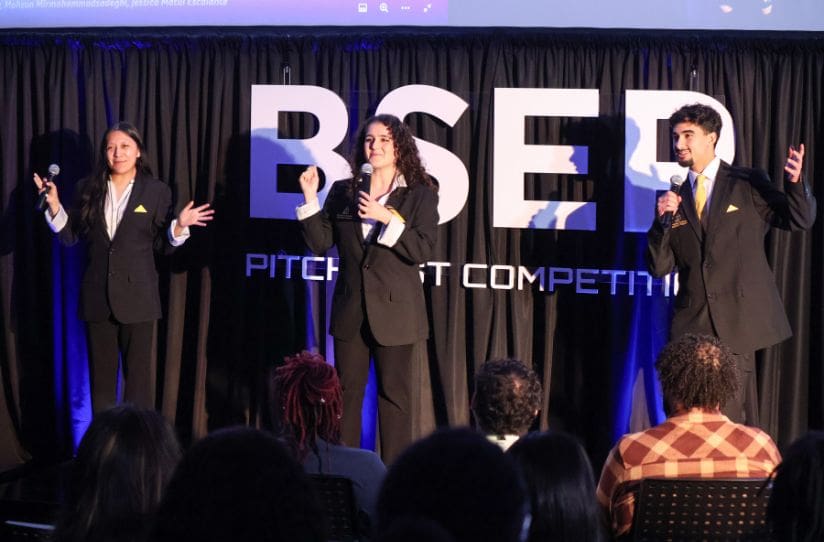
Noting that CDU鈥檚 neighboring community of Wilmington is home to five major oil refineries, student Isaac Samy explained 鈥淲e want residents of SPA 6 and underserved communities to have access to filtered air. Air shouldn鈥檛 be dependent on income, location, or access to electricity. It鈥檚 a vital need for everyone.鈥�
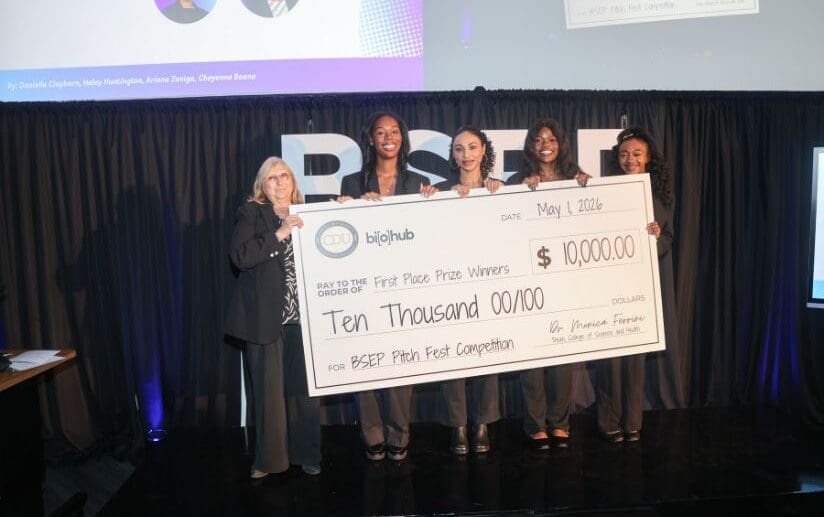
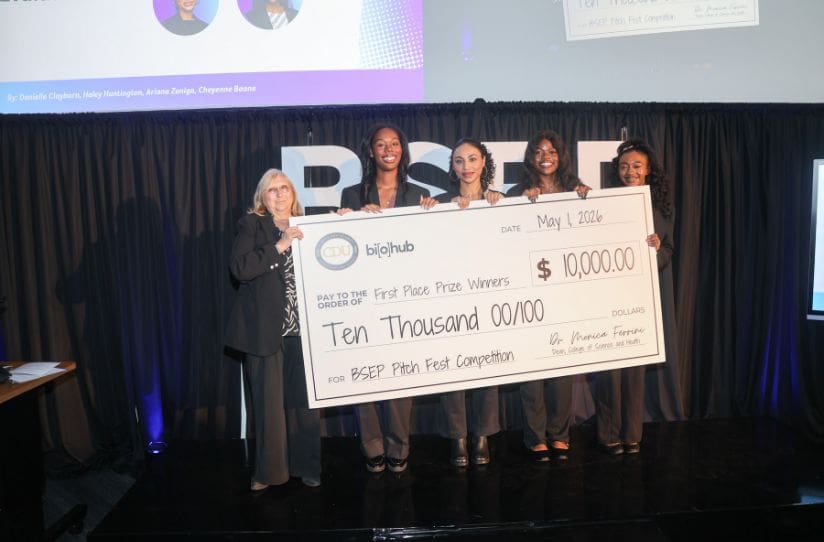
Another group composed of Haley Huntington, Danielle Clayborn, Ariana Zuniga, and Cheyenne Boone unveiled 鈥淓VE,鈥� a portable testing device that analyzes breath, saliva, and blood to detect early signs of endometriosis before symptoms escalate.
鈥淎s an all-female group, we wanted to address an issue that matters to us, especially since people in our group and people that we know are affected by endometriosis,鈥� said Huntington. 鈥淲e hope EVE helps bridge the diagnostic gap and gives women more confidence in early detection and proactive care.鈥�
The final presentation came from Mwinso Denkabe, Talia Lucky, and Leighton William, who proposed 鈥淧anoptes,鈥� a flexible bioelectromagnetic patch designed to detect early tissue failure.
While all teams demonstrated strong creativity and promise, only two received top honors. 鈥淓VE鈥� earned first place and a $10,000 grant, while 鈥淎tmosGuard鈥� took second place with a $3,000 grant. The funding will support the students as they turn their pitches into reality, advancing their commitment to communities often overlooked in health innovation. The event鈥檚 sponsors and partners include NASA Technology Transfer University and Biohub.